
How much rice do you actually need?
The question every caterer and every host asks the week before. Here are the real numbers, scaled from ten guests to four hundred, plus the method that gets separate grains every time.
Jump to the table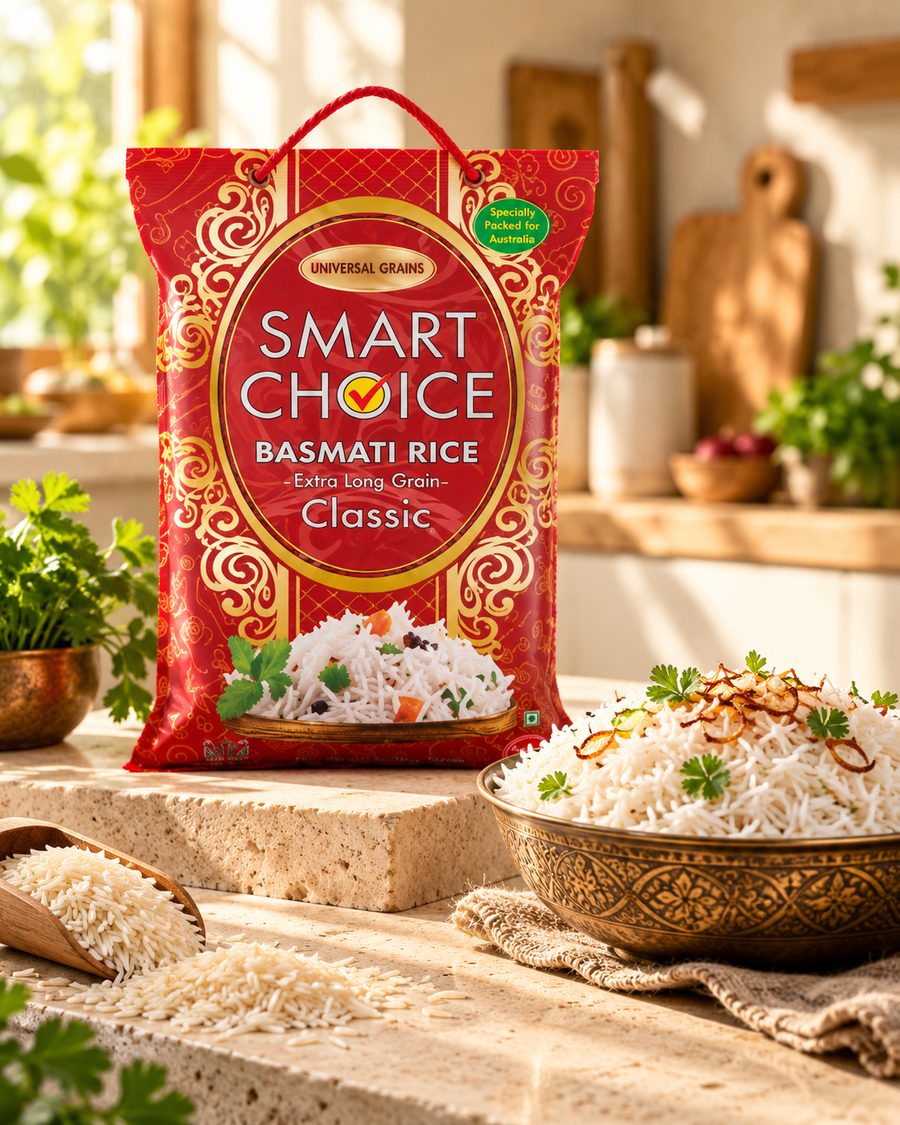
Uncooked basmati per person
Two numbers, because it depends what the rice is doing. As a side alongside curries, allow 75 g of uncooked rice a head. When rice is the main event — biryani, pulao as the centrepiece — allow 125 g. Basmati roughly triples in volume as it cooks.
| Guests | Rice as a side (75 g each) | Rice as the main (125 g each) | 20 kg bags needed (main) |
|---|---|---|---|
| 10 | 0.75 kg | 1.25 kg | — |
| 25 | 1.9 kg | 3.1 kg | — |
| 50 | 3.75 kg | 6.25 kg | — |
| 100 | 7.5 kg | 12.5 kg | 1 bag covers it |
| 150 | 11.25 kg | 18.75 kg | 1 bag |
| 200 | 15 kg | 25 kg | 1.5 bags |
| 300 | 22.5 kg | 37.5 kg | 2 bags |
| 400 | 30 kg | 50 kg | 2.5 bags |
A 20 kg bag is $52, which works out around 13 cents a serve at main-course portions. See prices and delivery →
Three things that decide whether it works
- Rinse
- 3–4 changes of water
- Soak
- 30 minutes, then drain
- Water ratio
- 1 : 1.8 by volume
- Rest
- 10 minutes, lid on
Steam-processed basmati like ours is firmer than raw rice to begin with, so it takes slightly less water and holds up far better in a warmer. That is why kitchens cooking in volume tend to prefer it.
Perfect basmati, the base method
Ingredients
- 300 g basmati (1½ cups)
- 540 ml cold water
- 1 tsp salt
- 1 tbsp ghee or neutral oil
Method
- Rinse in cold water three or four times, until the water runs almost clear. This is the step people skip and then wonder why the rice is gluggy.
- Soak 30 minutes. Drain well.
- Bring rice, water, salt and ghee to a boil in a heavy pot.
- Cover, drop to the lowest heat, cook 12 minutes. Do not lift the lid.
- Off the heat, rest 10 minutes still covered. Fork through and serve.
Everyday vegetable pulao
Ingredients
- 400 g basmati
- 700 ml water or light stock
- 2 tbsp ghee
- 1 onion, sliced thin
- 1 tsp cumin seeds
- 4 green cardamom, 1 bay leaf, 5 cm cinnamon, 4 cloves
- 200 g carrot, peas and beans
- 1 tsp salt
Method
- Rinse and soak the rice 30 minutes, then drain.
- Heat the ghee, fry the whole spices 30 seconds until they smell of themselves.
- Add the onion, cook to golden — about 8 minutes, and worth the time.
- Stir in the vegetables for 2 minutes, then fold the drained rice through for 1 minute so every grain is coated.
- Add the liquid and salt, bring to a boil, cover and cook 12 minutes on the lowest heat.
- Rest 10 minutes covered before forking through.
Chicken biryani for a function
Ingredients
- 6.5 kg basmati
- 10 kg chicken thigh, bone in
- 3 kg yoghurt
- 3 kg onions, fried golden
- 250 g ginger garlic paste
- Biryani masala, chilli, turmeric
- 400 ml ghee
- Saffron in 500 ml warm milk
- Mint and coriander, large bunches
- Salt
Method
- Marinate the chicken in yoghurt, ginger garlic paste, spices and half the fried onions. Four hours minimum, overnight is better.
- Rinse and soak the rice 30 minutes. Parboil in heavily salted water with whole spices to 70 per cent done — still firm at the centre — then drain at once. This is the step that decides everything.
- Layer marinated chicken in the base of large handi pots, then rice, then the rest of the onions, herbs, ghee and saffron milk.
- Seal the pots and cook on dum over low heat, 45 to 60 minutes.
- Rest sealed 20 minutes. Fold gently from the base so the grains stay whole.
Karachi biryani
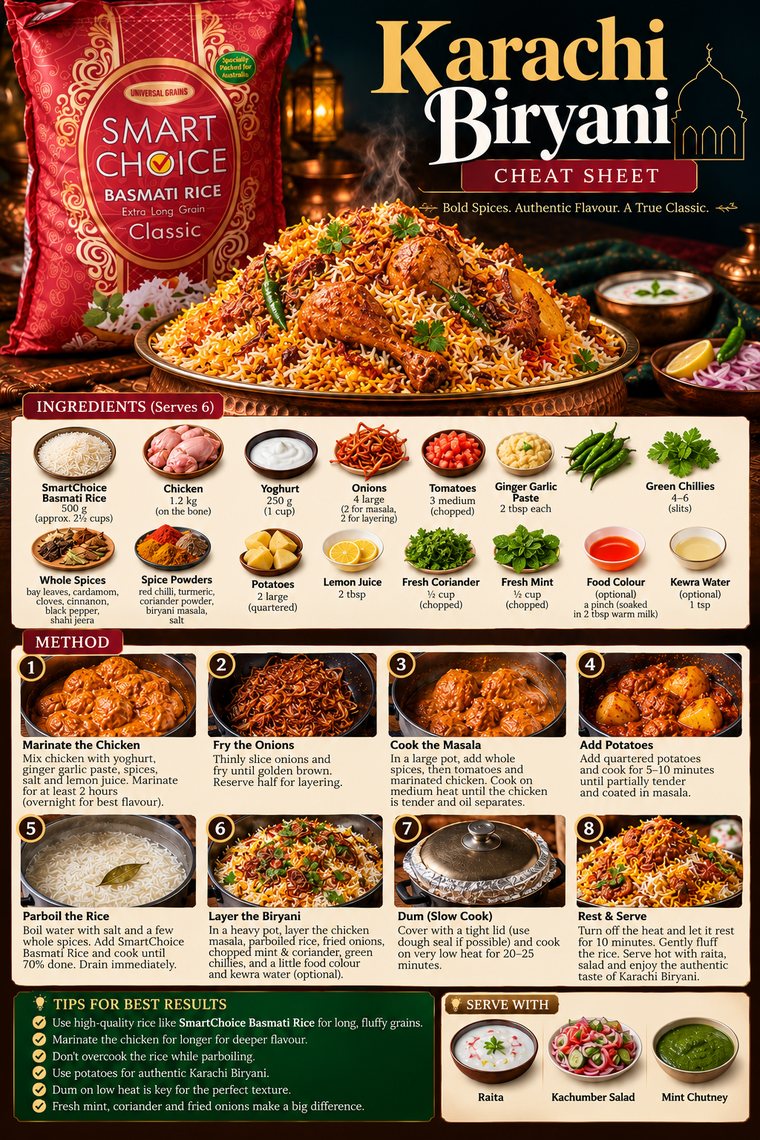
Bold, hot and tomato-forward, with potatoes in the layer — the detail that separates a Karachi biryani from everything else. Kewra and a pinch of colour finish it.
Ingredients
- 500 g basmati (about 2½ cups)
- 1.2 kg chicken, on the bone
- 250 g yoghurt
- 4 large onions — 2 for the masala, 2 fried for layering
- 3 medium tomatoes, chopped
- 2 tbsp each ginger and garlic paste
- 4–6 green chillies, slit
- 2 large potatoes, quartered
- 2 tbsp lemon juice
- ½ cup each fresh coriander and mint
- Whole spices: bay, cardamom, cloves, cinnamon, black pepper, shahi jeera
- Ground: red chilli, turmeric, coriander, biryani masala, salt
- Optional: a pinch of food colour in 2 tbsp warm milk, 1 tsp kewra water
Method
- Marinate. Chicken with yoghurt, ginger garlic paste, ground spices, salt and lemon juice. Two hours minimum, overnight for depth.
- Fry the onions. Slice thin and fry to properly golden brown. Keep half back for the layers.
- Cook the masala. Whole spices into a large pot, then tomatoes and the marinated chicken. Medium heat until the chicken is tender and the oil separates — that separation is the signal.
- Add the potatoes. Quartered, 5 to 10 minutes, until partly tender and coated.
- Parboil the rice. Heavily salted water with a few whole spices. Cook to 70 per cent — still firm at the centre — and drain at once.
- Layer. Chicken masala, then rice, then the reserved onions, mint, coriander, green chillies, and the colour and kewra if using.
- Dum. Tight lid, dough-sealed if you can. Very low heat, 20 to 25 minutes.
- Rest and serve. Ten minutes off the heat, then fluff gently. Raita, kachumber salad, mint chutney.
Lucknow biryani
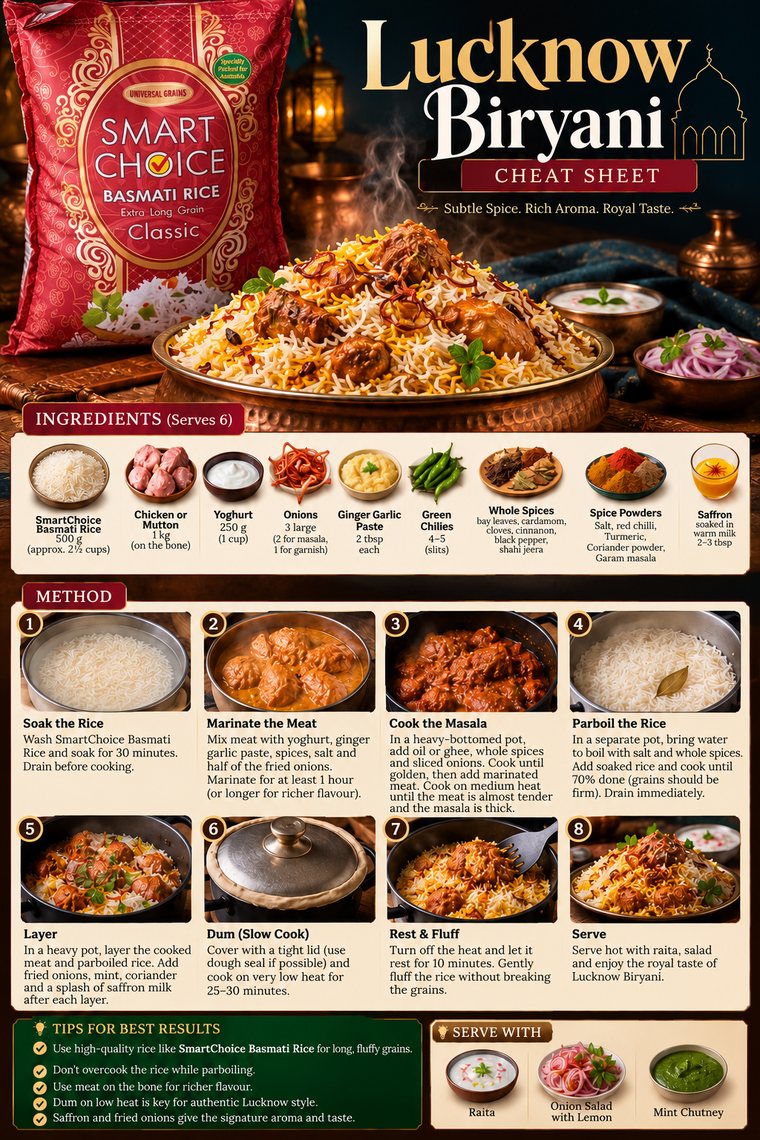
The Awadhi style — restrained where Karachi is bold. No tomato, no chilli heat to speak of; saffron and fried onion carry it, and the aroma does the work.
Ingredients
- 500 g basmati (about 2½ cups)
- 1 kg chicken or mutton, on the bone
- 250 g yoghurt
- 3 large onions — 2 for the masala, 1 fried for garnish
- 2 tbsp each ginger and garlic paste
- 4–5 green chillies, slit
- 2–3 tbsp saffron steeped in warm milk
- Whole spices: bay, cardamom, cloves, cinnamon, black pepper, shahi jeera
- Ground: salt, red chilli, turmeric, coriander, garam masala
Method
- Soak the rice. Wash well, soak 30 minutes, drain before cooking.
- Marinate the meat. Yoghurt, ginger garlic paste, spices, salt and half the fried onions. An hour minimum; longer is better, especially for mutton.
- Cook the masala. Ghee in a heavy pot, whole spices and sliced onions to golden, then the marinated meat. Medium heat until the meat is almost tender and the masala has thickened.
- Parboil the rice. Separate pot, salted water with whole spices. To 70 per cent, grains still firm. Drain immediately.
- Layer. Meat, then rice, with fried onions, mint, coriander and a splash of saffron milk after each layer.
- Dum. Tight lid, dough seal, very low heat, 25 to 30 minutes.
- Rest and fluff. Ten minutes, then fold gently so the grains stay whole.
- Serve. Raita, onion salad with lemon, mint chutney.
Rice for the whole event
Cooking for two hundred or more? A 20 kg bag is $52, and trade pricing starts at ten bags with an ABN. We hold pallets for caterers against their function diary — you pay as you draw it down, and we deliver free across metro Melbourne on twenty bags and over.
- Stock held in Melbourne, so reorders arrive the same week
- Free 5 kg sample so your kitchen can test it first
- Pallets held against your booking calendar
- Invoiced on delivery, paid by bank transfer